COMPLICITY
19th INTERNATIONAL ARCHITECTURE EXHIBITION VENICE
23.05 - 29.11, 2025
Intelligens: Natural. Artificial. Collective.
Armenian Pavilion: Against Complicity
Silva Ajemian and Jorge Eduardo Prado
The news today. On the one side, exploding pagers and walkie-talkies, imploded cities, drones, missiles, tanks, ethnic cleansing, refugees, terrorism, genocide, ecocide, resignation, fake news, propaganda, co-opted supply chains, et al. On the other, futurism, intelligence, inclusiveness, progress, technology, changing the world, transformation, fearlessness, et al. Architects undertake collective efforts to make proposals for a more responsive, resilient architecture, one with capacities to provide for people, for solutions, for redemption.
Weaponization.
The ethos of the day is weaponization, the exploitation of an existing condition to promote its opposite conclusion. To exploit architecture constructed as shelter to promote instability, displacement and casualties. Buildings are collapsed on people. Is the building the weapon or is it the bomb? Under what conditions are Architects being asked to provide?
Complicity.
Architects are called upon to deliver progressive solutions. We ask ourselves what morals and mores are expressed through architecture. How can architecture be complicit?
Architectural Amnesia.
Architecture is based on an agreement that public and private clients provide a site for development and a program from which Architects design a solution. However, this fragile consensus is predicated on a mutual agreement to value inhabitants and users. This codependency is existential.
However, to arrive at a solution requires exchanges of information with clients and stakeholders. For all the information exchanged there will be information withheld, plans unaccounted for and unaccountable. Will the buildings be used for their intended purposes? What of the site? What is its history? Has its chain of ownership been correct? Without these difficult questions, the alternative is what we call Architectural Amnesia. It is the bedrock of our complicity.
Erasure.
“History is written by the victors,” a phrase that comes to us from a contentious world history, one that illustrates the idea of cultural erasure. The erasure of a people is genocide. The erasure of a place is urbicide (destruction of a city) and domicide (destruction of housing). All serve strategic goals and tactical expediencies. “Bomb them back to the stone ages” is another phrase, employed by another empire to express the belief that a site could be cleansed back in time. But can it? Who is listening to the oral histories of people walking around with keys to their family homes destroyed by one political expediency or another?
Architectural Amnesia grants the practitioner an answer to this question: “It is not in my scope.” Beyond architectural memorials or “archaeological” museums (both subject to amnesiac chronologies), what building typology is granted the authority to transgress Architectural Amnesia?
Alternatively, every attempt at erasure exists as another sediment layer both literally and metaphorically, in the strata of collapsed floor plates as well as in biological and psychological strata of the people buried and above. It is the additive, unforgettable voice of the vanquished that must be heard. History to be written by the vanished is our revisionary history, our moral code, our stratagem.
Typologies.
Every day, we witness buildings collapsed on the very people they were designed to protect. Shelters become tombs. Tombs become reusable construction materials. Reusable construction materials become shelters. Where have all the people gone? Where are the architects? How do we think of building or rebuilding when the building itself is both the weapon of annihilation now and the building blocks of the future?
If architecture begins as an act of destruction, the excavation of the foundation, then what role will the architect perform in sifting the sedimentary layers exposed? Unearthing histories whose telling is still oral. Unearthing histories that are still warm to the touch.
Curatorial Proposal.
Architects are tasked with expressing community and cultural values in the built environment. It is inconceivable that we accept the attitude that the built environment is mere bricks, mortar and technology to be erased at the push of a button.
Revalorization is our revisionary history. The built environment exists as a moral imperative. While concrete solutions to achieve this revalorization may be beyond the scope of architects, cultural resiliency is still rooted in our willingness to raise questions. Expression is our stratagem. Expression is resistance. As such we will engage Armenian architects across the globe to collaborate on the task to conscientise the architectural community against complicity, against amnesia.
A formal request for proposals will be developed and published to the Armenian architecture community soliciting collaborative proposals exploring this theme. We present the Armenian Pavilion as provocation to the architectural community at large. Solutions may be illusive or unattainable but the need to raise questions, to challenge laws, to expand the role of the architect, to delve into history, or even to rewrite architectural curricula, are all part of potential proposals we seek.
Installation.
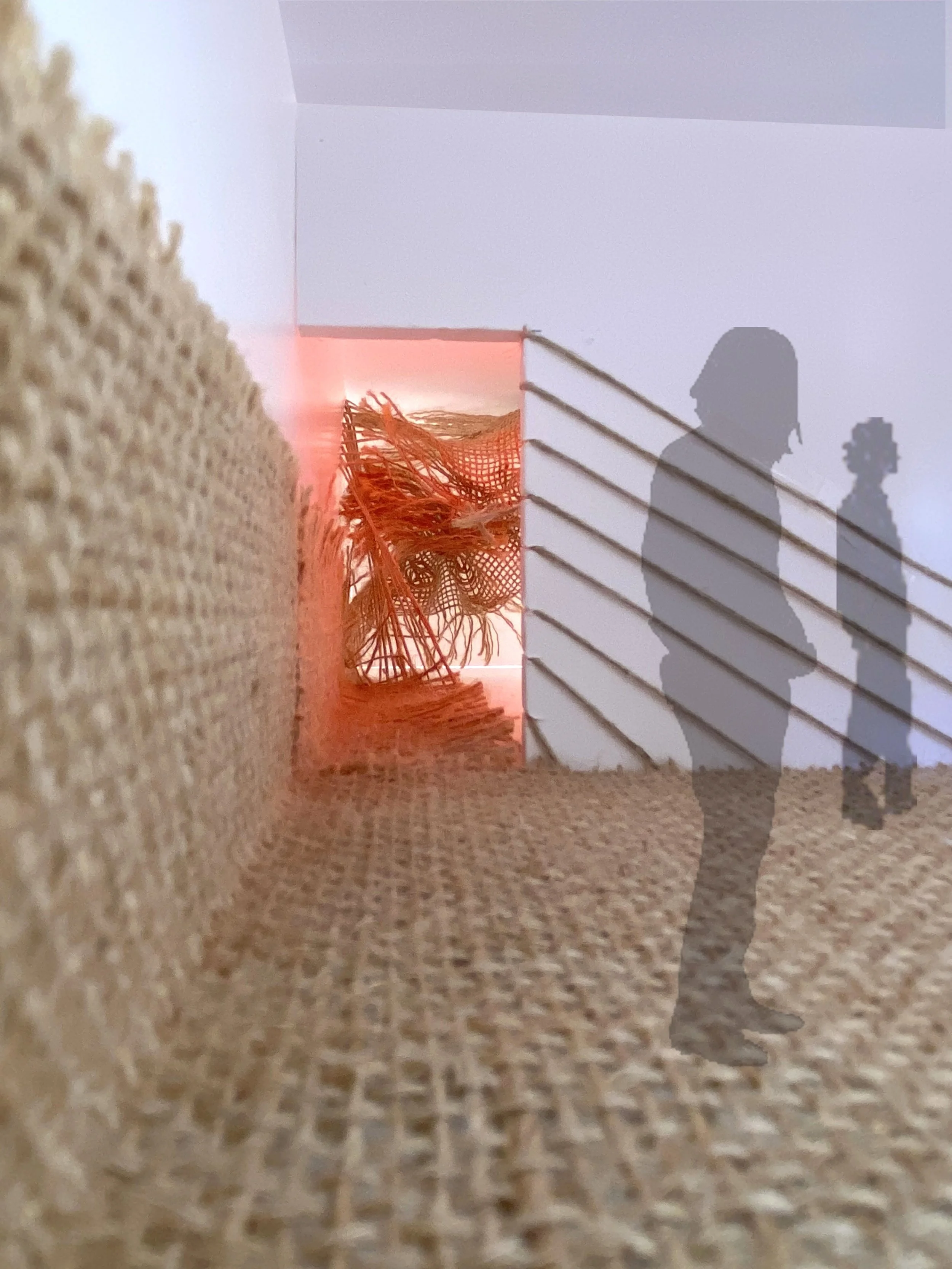
The exhibition design will spread across the exhibition hall creating zones for exhibition of collaborative projects. The first zone contains a woven knotted rug that represents the home. The home that shelters, where life happens. The ground plain beneath our feet becomes both focus and frame.
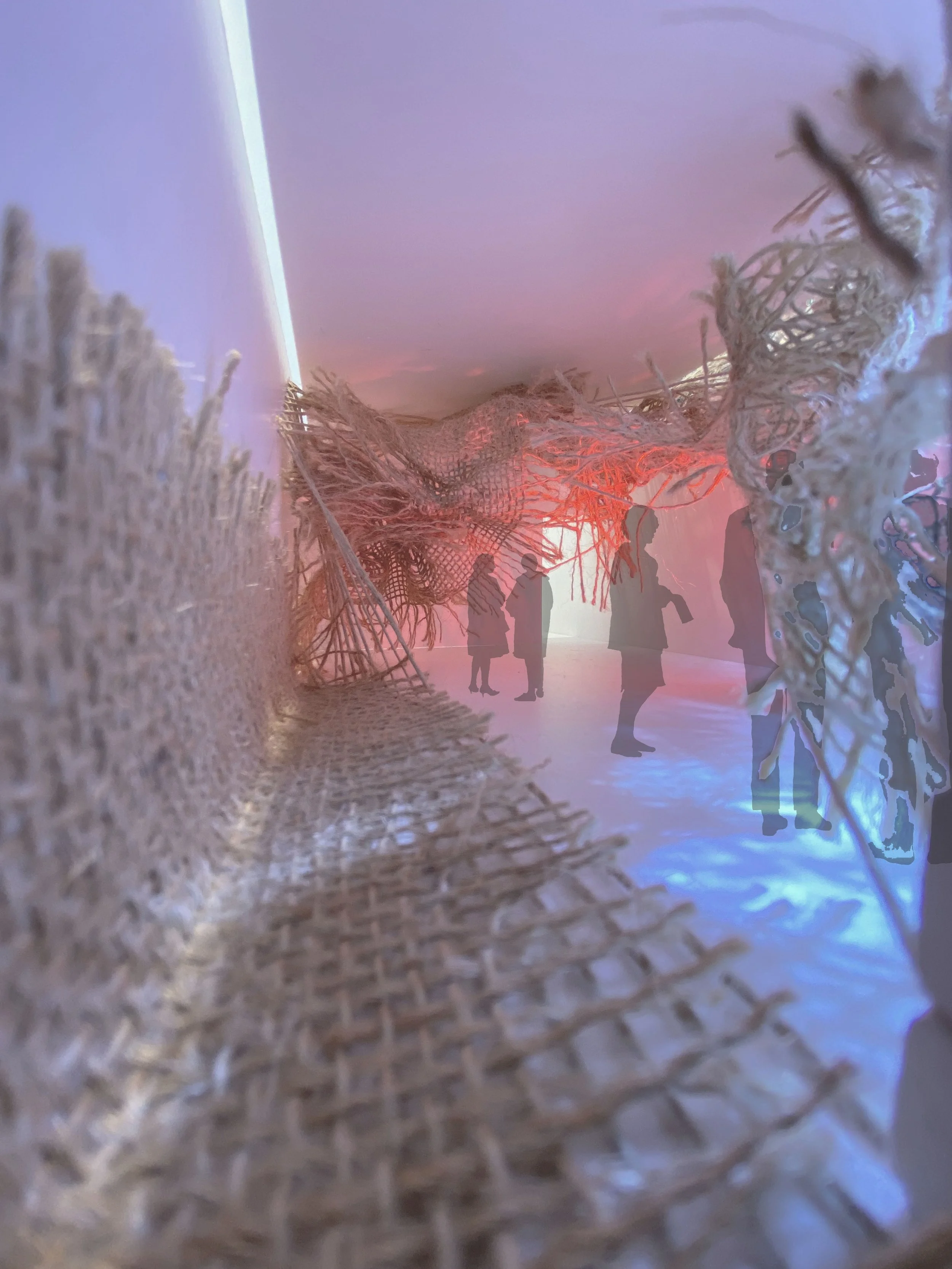
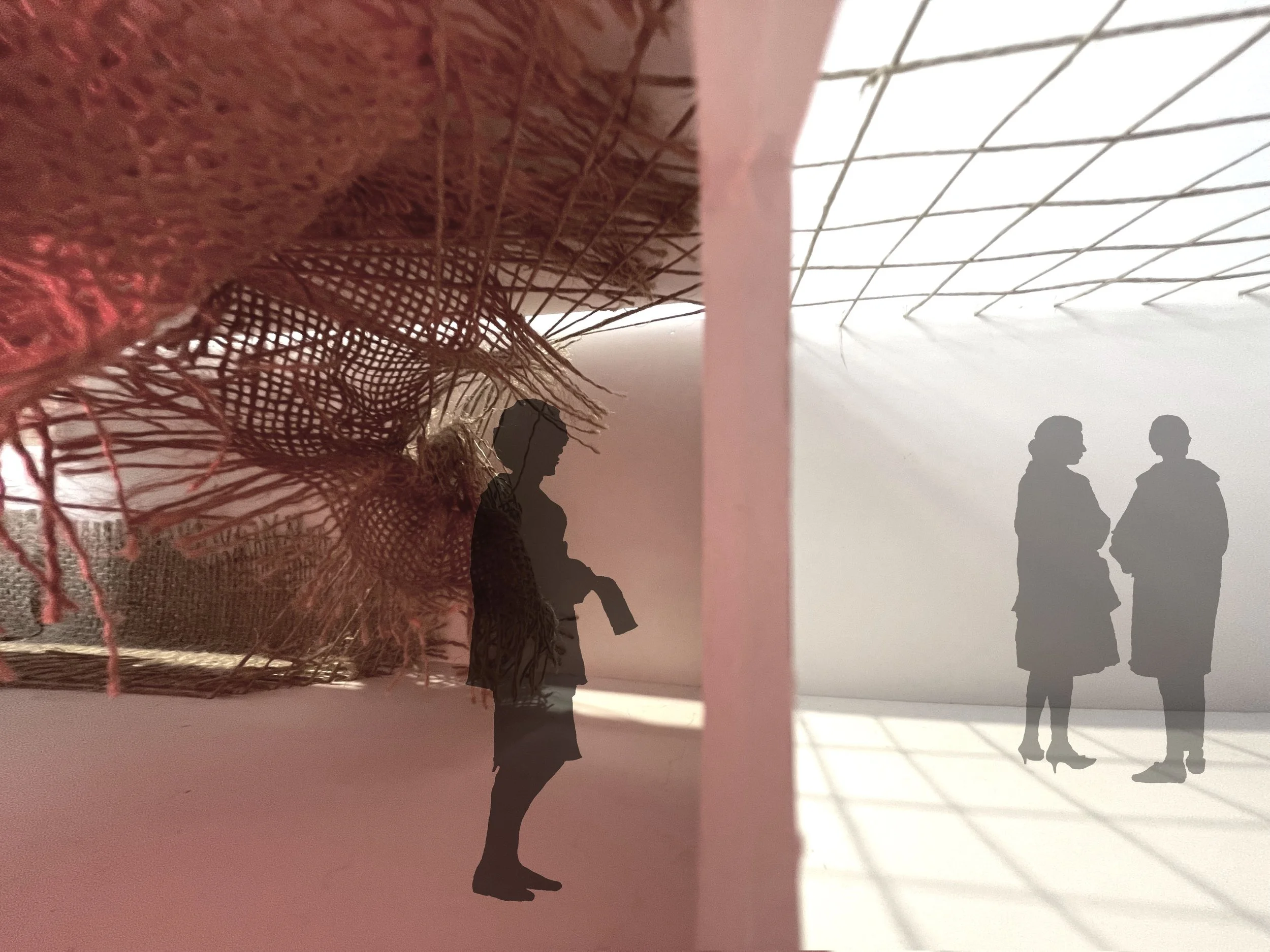
The carpet slowly disintegrates, and its strands rise to inhabit the next zone, the intermediate space of vanishing. The walls recede. We imagine the radical disassembly of the home through the disassembly of the rug as it stretches across the space providing an undulating path through lumps, masses.
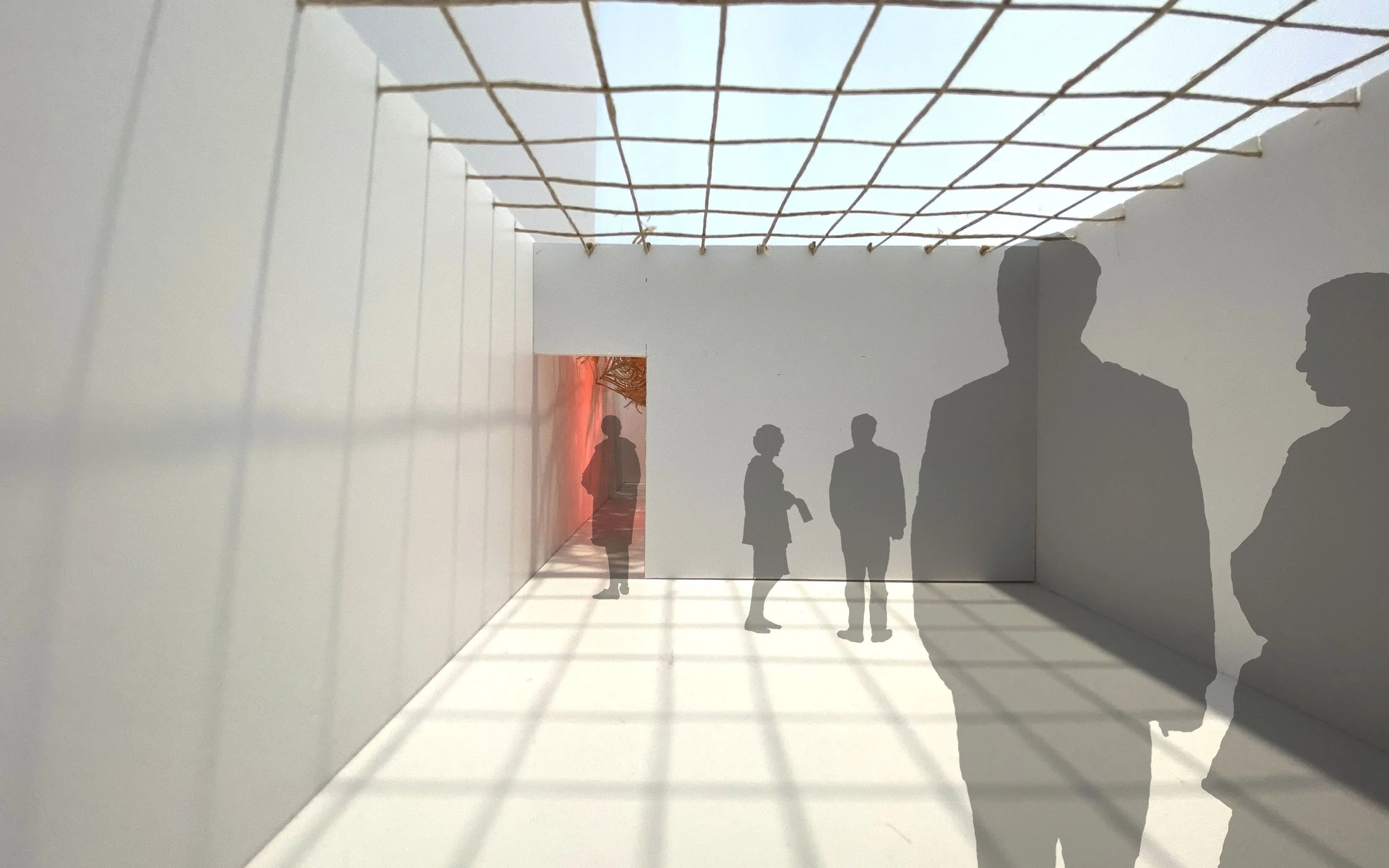
Finally, the path leads to the third zone where the strands of the weave are isolated to form a perfect grid hanging above our heads, metaphorically vanishing us below the ground plane. The grid above is the tabula rasa where all histories are erased and the amnesiac new is contemplated. We inhabit the underground. If available, we envision the third zone as an outdoor space filled with plants standing in for life underground.
In this envelope, the collaborative projects will be displayed or projected throughout the three spaces based on their content, on walls, floors, ceilings and pedestals.